
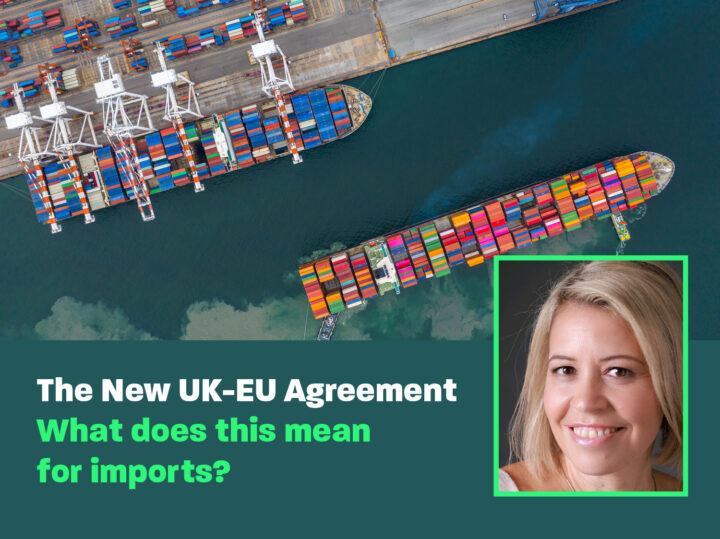
On the 19th of May, the government announced a new agreement with the EU, setting out post-Brexit relations across a range of areas including trade, fishery, travel, security, defence, environment and research. From an imports perspective, a new Sanitary and Phytosanitary deal has been agreed, which is set to remove some routine checks on animal and plant products, allowing food to cross EU borders with minimal controls.
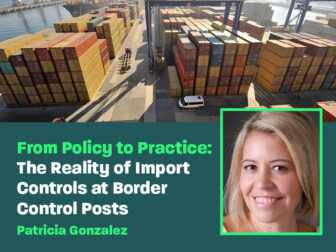
In this article, our National Technical Lead for Imports, Patricia Gonzalez, reflects on the potential changes and the impact they could have on importing animal products in the UK…
Although we are unsure what the agreement will entail and when this will come into place, we can be sure that the reduction of border controls will increase the risks associated with importing animal products. Over the past few years, a huge amount of money has been invested in both infrastructure and staff to prepare for carrying out the checks of EU products at the borders. Port Health Authorities have dedicated a lot of time to implement controls which ensure public health is protected, highlighting the disease risk from allowing free trade with the EU.
The intention is to decrease food prices and border queues, but at what cost to food safety? Within this year alone, we’ve had a series of outbreaks in the EU, including lumpy skin disease in Italy and France, sheep and goat pox in Romania, foot and mouth disease in Germany, Hungary and Slovakia, and peste des petits ruminants in Hungary, as well as diseases such as avian influenza and swine fever over previous years. Being surrounded by water provides us with a natural border, making it easier to control imports and mitigate risk. Opening our borders would increase these risks significantly, and could massively impact public health, animal welfare and the UK economy.
The foot and mouth crisis of 2001 resulted in an estimated loss of £8 billion, including culling, compensation to farmers, tourism losses and economic disruption. The only way to control the spread was imposing movement restrictions and introducing a mass culling policy which resulted in the slaughter of over 6 million cattle and sheep. A repeat of this would be devastating and we should ensure that the benefits of border control changes outweigh the risks.
It is true that we allowed free trade with the EU before Brexit, though that doesn’t necessarily mean this was the safest option. All pros and cons must be considered before implementing new rules and we need to strike the correct balance between increasing trade and safeguarding public health. It is vital to have robust processes in place to prevent disease outbreaks, and we need to ensure that these new rules don’t compromise on food safety.
You can find out more about the Portal Inspection Services we offer, here: Portal Inspection – E&J