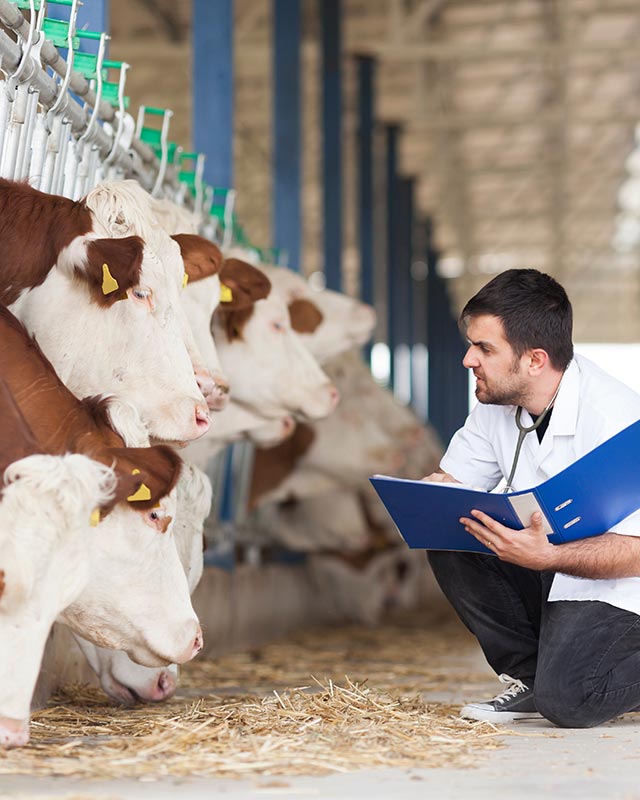
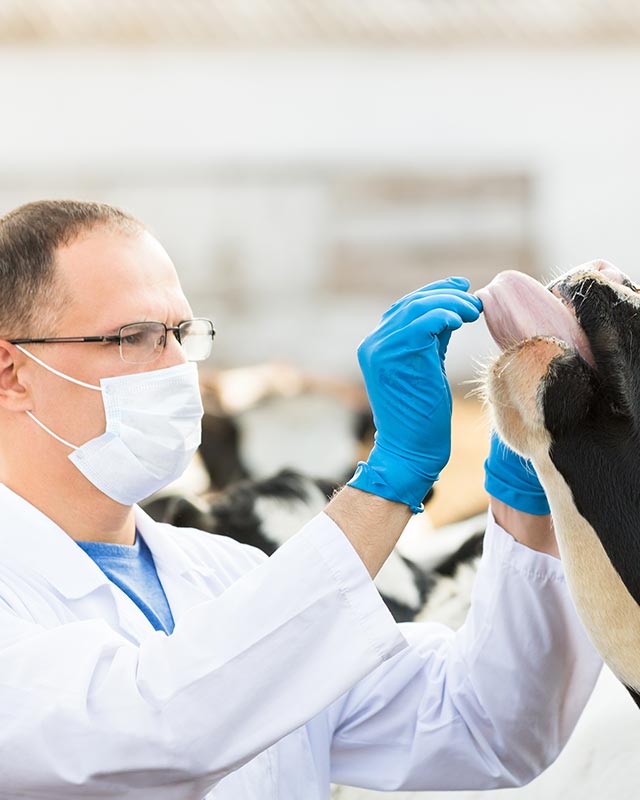
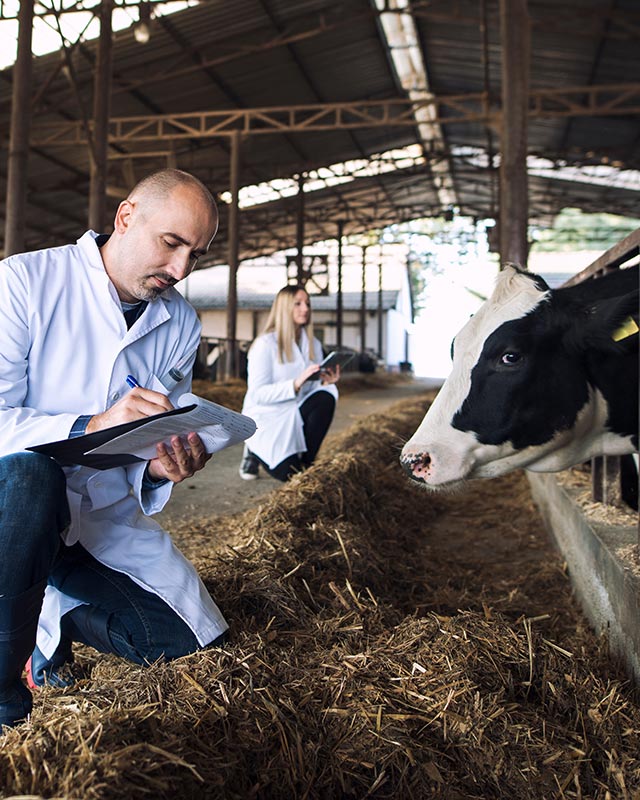

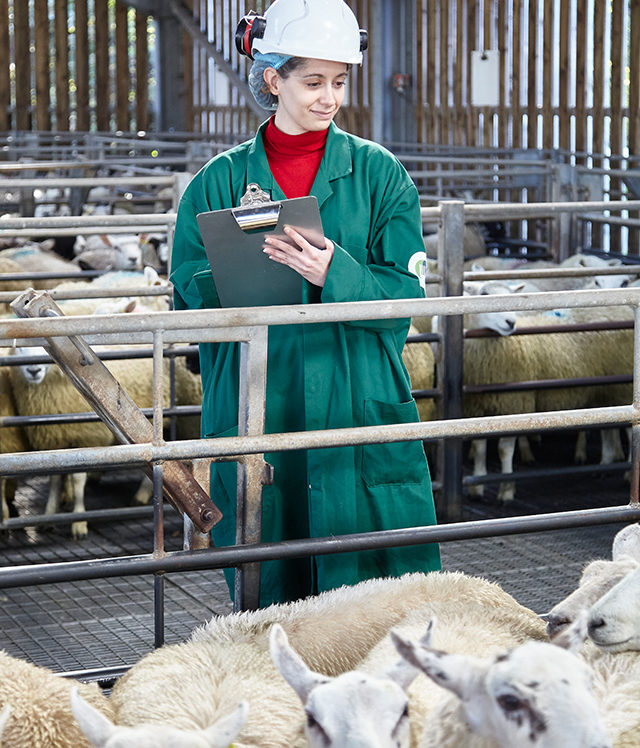
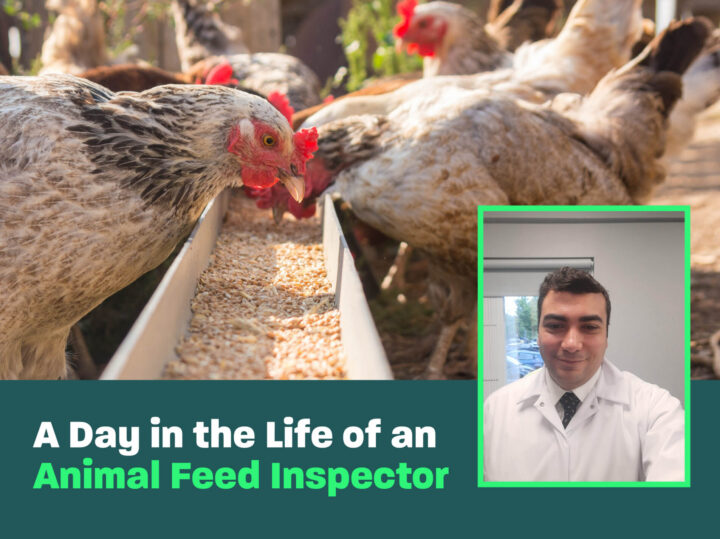
The FSA mission of “food you can trust” is more complex than just the food we are consuming – it also applies to the food animals themselves are eating. It’s important to ensure that standards of food safety are enforced in animal feed, too. As part of E&J’s efforts to diversify our scope of work, we now provide 12 qualified Animal Feed Inspectors, covering regions across the UK. After significant efforts to implement this service, the Animal Feed Inspection programme commenced in April 2025 and has seen E&J working on subcontracted basis with Trading Standards at Blackburn with Darwen Council. We hope to expand this service across other councils moving forward.
Meat Hygiene Inspector Ahmed Agrama was our first active Animal Feed Inspector and has helpfully provided a fascinating update into how Animal Feed Inspection is developing with E&J, and what this role really involves. Ahmed said:
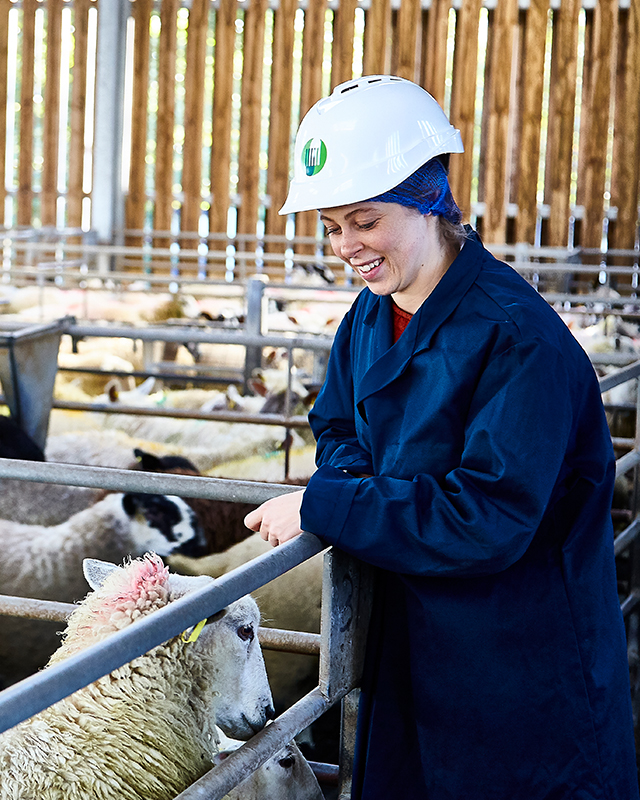
“My role involves carrying out inspections of registered and approved animal feed businesses on behalf of the local authority. I have to coordinate with all stakeholders including the E&J team, the stakeholders of the facility to be inspected, as well as Trading Standards/Council officers.
So far, I have carried out two inspections at different types of establishments, including a cheese and bone manufacturer for dogs, and an animal feed importer. These businesses have different processes, risks, and regulatory requirements, which has helped me appreciate the importance of taking a risk-based and proportionate approach to each inspection.
The inspection process normally begins with contacting the registered facility and arranging an appointment. Before the visit, I review the type of registration or approval held by the business and consider the relevant requirements that apply to the particular establishment. I then conduct the inspection in accordance with the applicable legislation, including Regulation (EC) No 183/2005, which sets out requirements for feed hygiene.
During an inspection, I assess a range of areas to determine whether the business has appropriate controls in place to produce, handle, store, and distribute animal feed safely. Depending on the type of registration or approval, the inspection may include reviewing the hazard control system, hazard analysis, personnel responsibilities and competence, production processes, traceability, complaints and recall procedures, quality control, facilities and equipment, storage and transport, and labelling.
One of the important aspects of the role is assessing the business’s HACCP-based procedures. I consider whether the hazards identified by the business are appropriate and whether effective controls have been established. Where necessary, I also meet with operators and other relevant stakeholders to discuss the HACCP plan, its implementation, and any revisions that may be required.
The physical inspection of the premises is equally important. I carry out a visual assessment of the site to identify potential non-compliances and areas of risk. This can include looking at the general condition and cleanliness of the premises, facilities and equipment, storage arrangements, contamination risks, and pest control measures, as well as other factors relevant to the particular business. Where required, sampling may also be undertaken as part of the inspection process.
I record my findings during the inspection and complete the appropriate inspection documentation. The report is discussed with the responsible person at the establishment, who is required to sign off the inspection report. Where non-compliances are identified, appropriate regulatory action can be taken depending on the circumstances and seriousness of the issue. This may include an improvement notice, seizure of feed, or other enforcement action where legally appropriate.
Working in this role has shown me that animal feed inspection involves much more than checking documentation. It requires a combination of technical knowledge, observation, communication, professional judgement, and an understanding of how legislation applies to different businesses. Every establishment presents different challenges, and effective communication with business operators is an important part of achieving compliance and protecting the integrity of the feed chain.”
For more information about Animal Feed Inspections visit: Animal Feed Inspections – E&J